

Kayla Grant
Executive Director
Read biography Kayla GrantKayla Grant
Executive Director
Kayla Grant brings over fifteen years of experience —twelve of which were dedicated to development work at the Inter-American Development Bank. Her journey with Compete Caribbean began as a consultant in 2013, where she managed the program’s knowledge portfolio, translating private sector and business climate research into actionable policy insight. Her career at the IDB transitioned into a Specialist in Competitiveness, Technology, and Innovation, where she team led several technical assistance projects and expanded CCPF’s reach into multi-million dollar, high-impact initiatives that strengthened productivity, competitiveness, technology adoption, intellectual property, and innovation policy across the region. She holds a Master’s degree in International Trade Policy from the University of the West Indies (UWI), a Bachelor’s degree in International Business and Economics from Galen University and the University of Indianapolis, and a certification in Monitoring and Evaluation from American University.

Russell Franklyn
Operations and Financial Coordinator Consultant
Read biography Russell FranklynRussell Franklyn
Operations and Financial Coordinator Consultant
Russell Franklyn is the Operations and Financial Coordinator Consultant. He is a seasoned professional, working in Development, specifically in the Caribbean for over 15 years in a variety of sectors such as private sector development and regional quality infrastructure. Russell holds a BSc in Economics & Accounting from the University of the West Indies and a Master's in Business Administration from the Edinburgh Napier University. He is also a Certified Public Accountant (CPA) and Project Management Professional (PMP).

Nekoda Lovell
Finance and Reporting Officer
Read biography Nekoda LovellNekoda Lovell
Finance and Reporting Officer
Nekoda Lovell is a highly motivated and results oriented Chartered Certified Accountant (ACCA) with over six years of experience in audits and financial reporting. She has a proven ability to manage complex financial projects, ensure compliance with accounting standards and provide accurate and timely financial reporting.
As the Finance & Reporting Officer for Compete Caribbean Partnership Facility she is responsible for all aspects of financial reporting, budgeting and forecasting. In this role, she is committed to maintaining the highest standards of financial integrity and accuracy, providing timely and insightful information to support decision-making and contributing to the success of Compete Caribbean Partnership Facility.

Tara Lisa Persaud
Project Development Consultant
Read biography Tara Lisa PersaudTara Lisa Persaud
Project Development Consultant
Tara Lisa is an international development expert who has spent 24 years working to increase opportunities for Caribbean people by supporting sustainable social and economic development across the region. She qualified with an MSc in Development Studies from the London School of Economics and Political Science (LSE), and a BA degree in Third World Development from Wellesley College, MA, USA. She is Phi Beta Kappa, a Chevening Scholar and a Margaret Freeman Bowers Fellow for Public Service. She has also received training in Advanced Negotiations (Harvard-MIT).
Tara Lisa has worked with Caribbean government institutions, multilateral organisations, and international development agencies on issues including business climate reform, programme design, delivery and management, public policy, gender equality, donor coordination, capacity development, public-private dialogue, innovation funds, and project monitoring and evaluation. She has worked with the Inter-American Development Bank, the Caribbean Development Bank, UN agencies including, UNDP, UNIFEM, UNFPA, and UNICEF, and the University of the West Indies.
Between 2011-2017, Tara Lisa worked on the first Phase of Compete Caribbean to improve the business climate and to increase exports and employment across the Caribbean. She led over 30 projects with government agencies, aimed at improving investment and business facilitation. Tara Lisa has a reputation for solving problems by identifying win-win solutions and recommending decisive action to clients. She has been successful in building excellent client/partner relationships that serve to increase project efficiency and sustainability.

Dario Pile
Pillar 1 Coordinator
Read biography Dario PileDario Pile
Pillar 1 Coordinator
Dario is a private sector development specialist with expertise in leading high-impact development projects. Dario holds a Master’s degree in International Trade Policy and a Bachelor’s degree in International Business from the University of the West Indies Cave Hill Campus. Dario has worked with national, regional and international business support organizations, regional conglomerates and business consulting firms in the Caribbean. He is committed to facilitating competitiveness and productivity enhancement of the regional private sector.
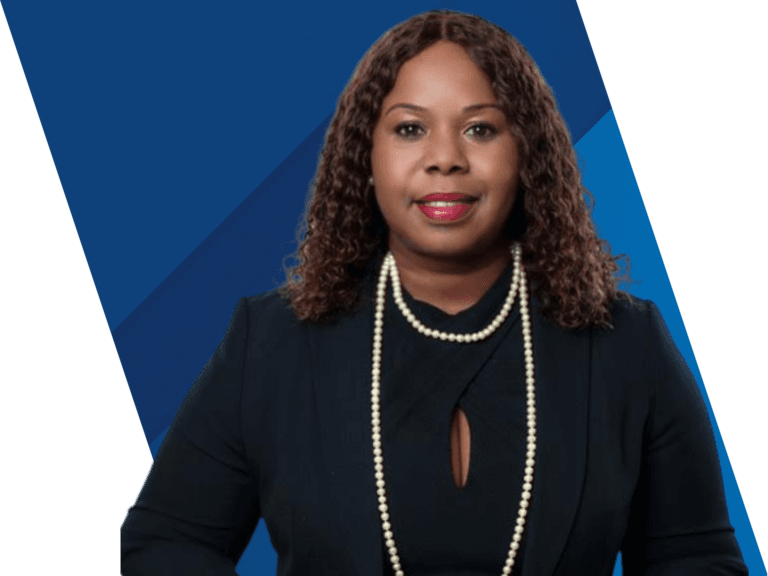
Amanda Charles
Program Coordinator – Pillar 2
Read biography Amanda CharlesAmanda Charles
Program Coordinator – Pillar 2
Amanda is a sustainable development specialist with extensive public and private sector experience. She has worked in senior positions at both the regional and international levels, spanning over 15 years. She most recently headed the Sustainable Tourism Product Development Division at the Caribbean Tourism Organization (CTO) in Barbados, with responsibility to lead implementation of the CTO’s Sustainable Tourism Programme, aimed at enhancing the growth, competitiveness and resilience of Caribbean destinations and tourism businesses.
Previous roles included Sustainable Tourism Adviser at the Association of Caribbean States (ACS) in Trinidad, and Consultant at the Organization of American States (OAS), Department of Economic Development in Washington DC. She has also worked at several international NGO’s including Counterpart International and the United Nations Foundation. Her experience includes project design and implementation, policy formulation and coordinating knowledge-exchanges and capacity-building initiatives in areas related to Climate Change and Disaster Risk Management, Environmental management, Health Safety, and Community/MSME Development.
Amanda is highly skilled in project management, resource mobilization, donor and partner coordination, and holds a Master’s Degree from The George Washington University School of Business, with a concentration in Sustainable Destination Management.

Miguel Guirao
Project Development Officer
Read biography Miguel GuiraoMiguel Guirao
Project Development Officer
Miguel Guirao has 10+ years of working in International Development in the Caribbean. Previously, he worked for the United Nations Development Programme (UNDP) in Disaster Risk Reduction, COVID-19 Recovery and Private Sector Development, managing projects in Barbados, Antigua and Barbuda, Dominica, Grenada, Saint Kitts Kitts and Nevis, Saint Lucia and Saint Vincent and the Grenadines, The British Virgin Islands, Anguilla and Montserrat.
Also with UNDP, he worked in The Bahamas and Albania. Most recently he worked in New York in charge of managing the response to crises in the Eastern Europe and Central Asia regions.
Miguel holds an MA in International Studies and Diplomacy from SOAS, University of London and is fluent in Spanish and English.

Zahra Alleyne
Project Development Officer
Read biography Zahra AlleyneZahra Alleyne
Project Development Officer
Zahra is a private sector development and project implementation specialist with 13+ years of professional experience working on private sector development, international development, sector competitiveness, innovation & entrepreneurship and enabling business environments in the Caribbean region and beyond. Zahra believes in the power of consistent, impactful work to support sustainable development to improve lives and create opportunities.
Zahra holds a MSc in Global Studies from the University of the West Indies and a Bachelor of Arts from Yale University.

Ibrahim Abdullah
Project Development Officer
Read biography Ibrahim AbdullahIbrahim Abdullah
Project Development Officer
Ibrahim Abdullah joins CBA effective 1st July 2025 as the Project Development Officer (PDO) Consultant, assigned to Compete Caribbean. His professional experience spans program and project management, monitoring and evaluation, climate finance, and sustainable development, with over 15 years of work in environmental management and climate action, civil society partnerships, and the operational delivery of grantmaking programs. He holds a BSc in Management with minors in Finance and Marketing, and an MSc in Strategic Leadership and Management from The University of the West Indies, St. Augustine. Ibrahim is currently pursuing doctoral research in governance and domestic climate finance with SALISES, also at The University of the West Indies.

Tanya Webster
Administrative Assistant
Read biography Tanya WebsterTanya Webster
Administrative Assistant
Tanya Webster is an accomplished administrative professional with over a decade of experience in various sectors, including renewable energy and hospitality. Throughout her career, she has demonstrated exceptional skills in administrative support, human resources, sales, and event coordination, playing a pivotal role in the success of the organizations she has been part of.
Tanya's extensive background equips her with a unique perspective on the intricacies of organizational management. Her experience in hospitality has honed her ability to thrive in dynamic environments, while her work in renewable energy reflects her adaptability and commitment to sustainability.
In addition to her practical experience, Tanya holds certificates in Administrative Management and has recently completed a certification in Human Resources Management from Bimap. These qualifications further enhance her capabilities and reinforce her dedication to professional development in her field.
With her diverse skill set and commitment to excellence, Tanya Webster continues to be a valuable asset in any administrative role.

Sylvia Dohnert
Advisor
Read biography Sylvia DohnertSylvia Dohnert
Advisor
Sylvia Dohnert is a Lead Private Sector Development Specialist at the Inter-American Development Bank. Among her functions, she leads Compete Caribbean, a multi-donor facility of US$27.5M focused on stimulating the development of the Private Sector in 13 Caribbean countries by supporting private sector innovation and improving the business climate.
In addition to the Caribbean, she has worked in Bolivia, Brazil, Chile, Uruguay, Paraguay and Venezuela. She has a PhD in Economic Development and Regional Planning from the Massachusetts Institute of Technology.


